Cast vs Forged Off-Road Wheels
The wheel industry tends to frame cast and forged as rungs on the same ladder, with cast at the bottom and forged at the top. It’s a tidy story, and it’s only partially true.
For off-road builds specifically, the two aren’t competing upgrades. They serve different kinds of builds with different priorities at different price points. Understanding where each one actually belongs means choosing based on your rig, not on someone else’s marketing.
How Cast Off-Road Wheels Are Made
Casting starts with molten aluminum poured into a mold and solidified under controlled conditions. Modern processes, specifically low-pressure and counter-pressure casting methods, have tightened grain structure and wall consistency considerably over older techniques. The result is a wheel with predictable, well-understood mechanical properties that can be accurately load-tested and rated for its intended application.
A cast wheel built specifically for off-road duty, with the right alloy selection, wall thickness, and spoke geometry, handles the physical demands of wheeling, rock crawling, and loaded overlanding without issue. The engineering behind the wheel matters more than the process used to make it.
How Forged Off-Road Wheels Are Made
Forging starts with a solid billet of aluminum, most commonly 6061-T6, pressed under extreme mechanical force before any machining takes place. That compression aligns the metal’s grain structure, making the material denser and more consistent than cast aluminum of the same alloy. After forming, the wheel is heat-treated to bring it to full temper.
The structural advantage is real. Forged aluminum yields better strength-to-weight ratios than cast, and it tends to deform under catastrophic stress rather than fracture, which is a more forgiving failure mode. Whether those advantages are meaningful to your specific build is a separate question worth answering honestly.
The Differences That Actually Matter
Weight
Forged wheels run lighter than cast equivalents at the same diameter and design. On large fitments, 22″ and 24″ in particular, that weight reduction across all four corners has a measurable effect on unsprung mass, which influences ride quality and steering response. The weight advantage compounds with diameter, so it matters most when wheel size is already working against you.
At 17″ and 18″, the weight gap between cast and forged is real but smaller in absolute terms. For most off-road applications where 17″ is the practical baseline, it doesn’t translate into a meaningful performance difference under normal trail conditions.
Structural Behavior
Both construction types perform reliably within their load ratings. The distinction shows up at the extremes. A well-engineered cast wheel handles sustained off-road stress without issue. It’s not brittle, it doesn’t fail unpredictably, and it meets the same load rating standards as forged wheels designed for comparable applications.
Forged aluminum’s advantage is what happens when a wheel exceeds its limits. It deforms rather than cracks. In high-speed desert running or competition environments where impact cycles are frequent and severe, that difference in failure mode has a real consequence. In typical wheeling, rock crawling, and overlanding, a quality cast wheel rated for the application doesn’t get pushed to that point.
Cost
Forging requires more process steps, more raw material per wheel, and design-specific tooling that costs more to produce. A cast wheel costs less because the process is more efficient, not because anything meaningful was cut. You’re paying for a different manufacturing process, and the price should reflect whether that process solves a real problem for your build.
Why 17" Still Wins for Off-Road
Before landing on a construction type, wheel diameter deserves a moment. For serious off-road use, 17″ remains the practical baseline. A 35″ tire on a 17″ wheel gives you roughly nine inches of sidewall. That’s your cushion against rock damage, your traction surface on loose terrain, and your buffer when airing down. Move to a 20″ wheel under the same tire and you give up meaningful sidewall height in exchange for aesthetics.
How tire size affects wheel requirements covers those tradeoffs in full, but the short version is that bigger wheels work against most off-road builds. When the rig is articulating across uneven terrain and every inch of sidewall is doing work, diameter stops being a styling decision.
Cast Wheels and Off-Road Reality
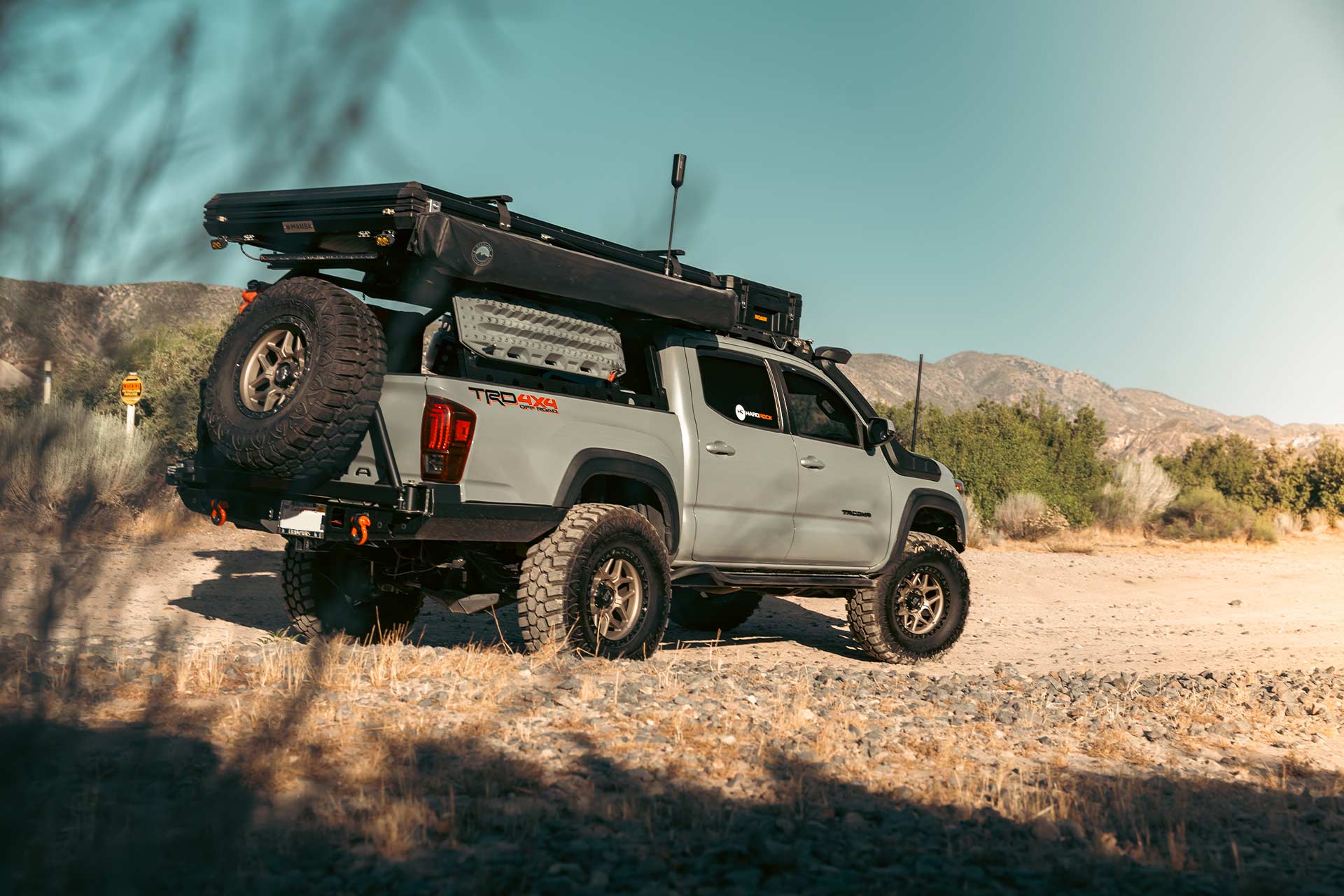
For less extreme trail driving, overlanding, and lifted daily drivers, meaning the large majority of builds out there, a well-engineered cast wheel covers everything asked of it. Off-road performance at that level depends more on load capacity, offset, width, and build-specific engineering than it does on whether the wheel was cast or forged. Getting the offset right for your platform matters just as much as the wheel’s construction. The wheel offset guide walks through how to approach that for a specific build.
Where Forged Wheels Make a Difference
Here’s where the honest answer lands: in our wheel lineup, cast and forged aren’t competing tiers of the same product. They’re different products for different builds with different goals entirely.
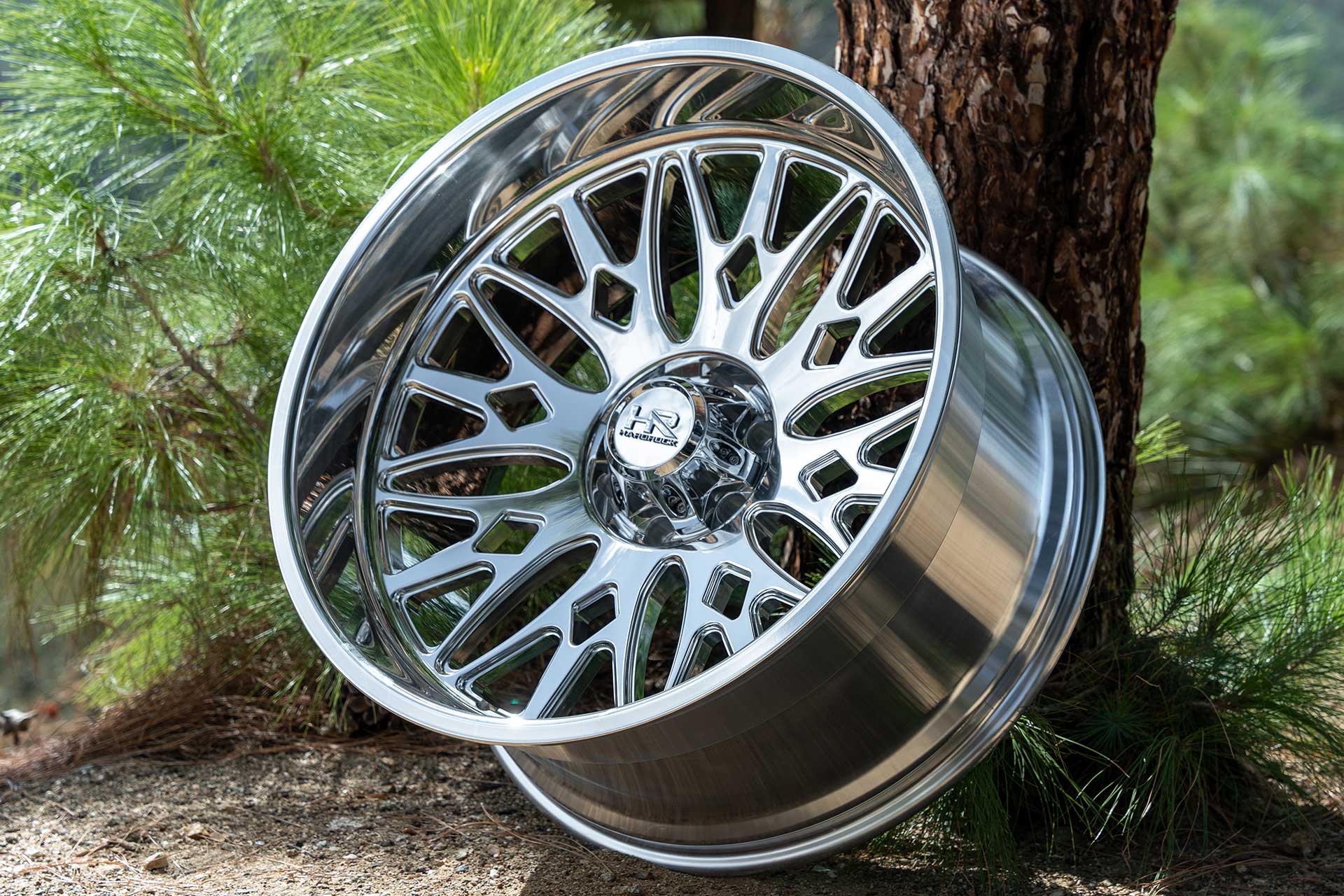
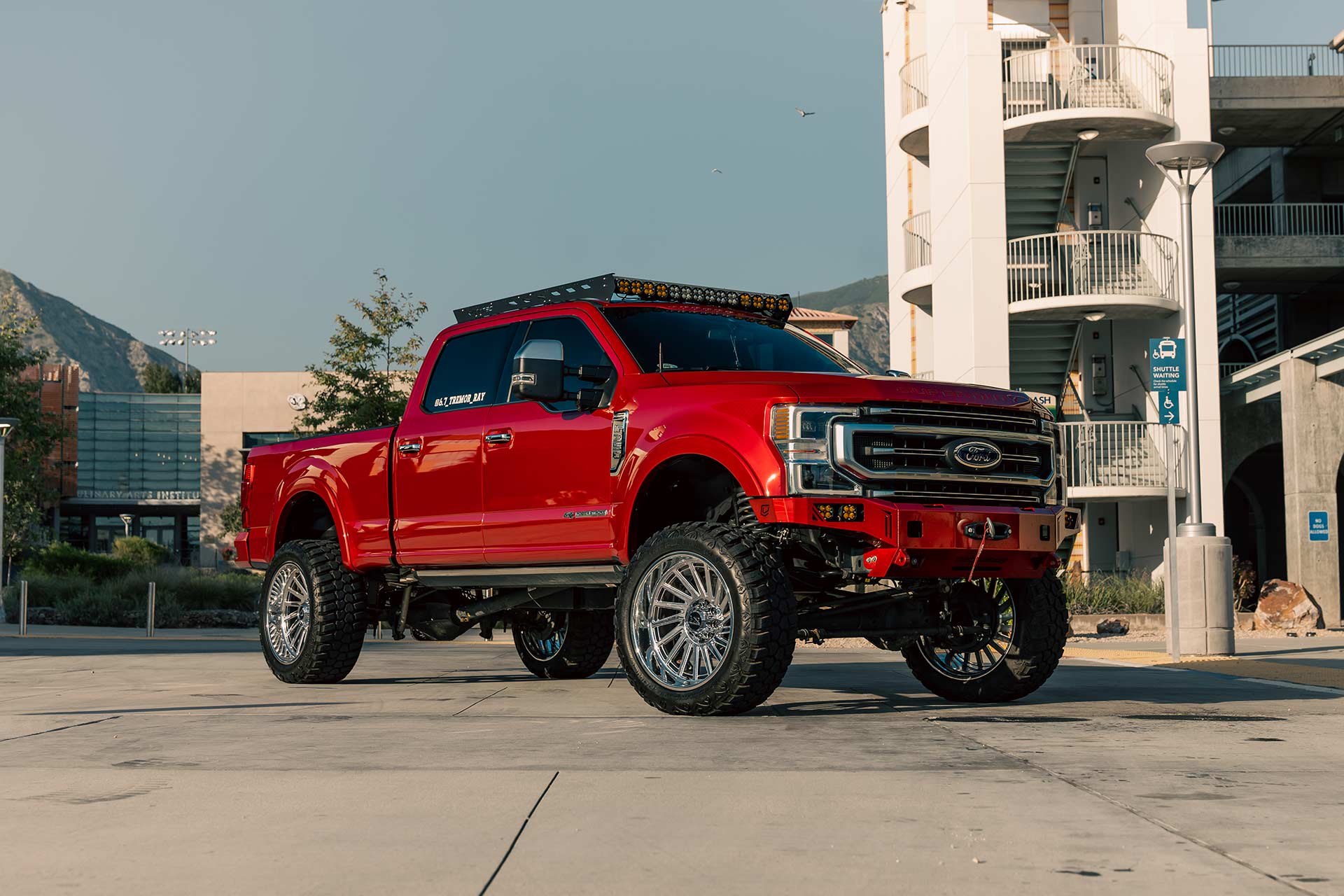
The Concave Forged collection is a 22″ and 24″ wheel, sizes that prioritize visual presence and aesthetic impact. These are built for trucks where the primary objective is how the rig looks: show trucks, lifted builds with a strong aesthetic-first identity, and setups where the owner has consciously prioritized fitment and finish. At those diameters, forged construction contributes to a lighter, cleaner wheel that fits the build without the weight penalty a cast wheel in the same size would carry.
If you’re running 35s on a 17″ wheel and spending your weekends on the trail, the Concave Forged line was never meant for your build. If you’re building something that commands attention at a show or a truck meet, the conversation looks entirely different.
The Hardrock Lineup
100 Series: Built for the Trail
The 100 Series is Hardrock’s dedicated off-road cast lineup. Available in 17×9 and 20×9 across a wide range of bolt patterns covering most truck and SUV platforms, the 100 Series is engineered for the builds where cast construction earns its place.
The H105 runs a concave mesh design with a simulated beadlock ring and a stepped lip, available across both 5-lug and 6-lug bolt patterns. The H107 takes a split spoke direction with an outer structural ring for a different visual profile at the same broad fitment coverage. The H111 is the newest addition, with deeper concavity and an integrated aero ring for builds looking for a more modern, aggressive direction.
If you’re pairing any of these with a larger tire setup, it’s worth running through the load capacity guide to verify the right specs before committing to a fitment.
Concave Forged: Built for the Build
The Concave Forged collection is fully forged 6061-T6 aluminum across the entire wheel, including the inner barrel, and polished on every surface and angle. Most wheels in this space stop at polishing the face or the lip. The Concave Forged line is finished completely, front to back, which shows in person and holds over time.
Available in 22″ and 24″ with 12″ widths, these are built for the builds where presence is the priority.
Have Questions About Your Build?
Fitment decisions change with every platform and use case. If you’re working through which direction fits your rig, reach out to the Hardrock team for a straight answer.